Service-business websites
Next.js or WordPress for a service-business website?
Choose WordPress if your own staff will edit pages, add content often or need plugins. Consider Next.js if a developer will maintain the site and you want tight control of speed and the lead-capture flow. Who runs the site after launch decides this more than any feature does.
By itmarkerz Technologies. Updated 30 October 2026.
Why we can answer this from both sides
We sell both. Next.js runs the lead-generation sites we look after in Australia. We also build on WordPress, connect it to systems such as Microsoft Dynamics, and publish WordPress care plans at Premium USD 89/month or Enterprise USD 159/month (invoiced in the customer's local currency). So it makes no difference to us which you pick, as long as it suits how you will run the site.
Be careful with comparisons from agencies that only sell one. And be careful with us too, since this website is built on Next.js.
The comparison that matters to a service business
| Question | WordPress | Next.js |
|---|---|---|
| Who edits a page? | Your staff, in an editor they can learn in an afternoon | A developer, unless a content system is added |
| Adding a new feature | Often a plugin, often quick | Written by a developer, or a paid service connected to it |
| Speed | Depends on theme, plugins and hosting. Can be fast, but drifts as plugins pile up | A fast start, because nothing loads unless someone chose to add it. Scripts added later can still slow it |
| Quote forms | Form plugins, with stored entries depending on the plugin | Custom-built around your questions, with storage, export and email built to fit |
| Maintenance | Core, theme and plugin updates, all the time | Framework and package updates, done by a developer |
| Finding help | Very wide market | Smaller market, and you need a developer rather than a site manager |
| Starting cost | Usually lower for a template-based site | Usually higher, since more of it is built by hand |
| Where it goes wrong | Plugin conflicts, an out-of-date plugin, a heavy page builder | No one left who can change it, or a small edit that needs a developer |
What is true today
WordPress is still the default. W3Techs reported 39.5% of all websites using it on 30 October 2026, and that popularity is itself an advantage, because someone can always be found to work on it. The current release is 7.1.4, from 28 October 2026. The 7.1 branch has had four point releases since 19 August, which shows how regularly someone needs to be applying updates.
Next.js is on 16.4, released on 6 October 2026. It isn’t something you can set up and forget either. The Next.js team moved to a formal security release process in July 2026, has published several security updates since, and has another scheduled for 3 November 2026. On a simple marketing site, a static page reduces what’s exposed, but someone must still own those updates.
Does Next.js make a site faster?
It gives you a better starting point, because a page loads only the code someone chose to include. But a heavy image or a tag manager full of scripts slows any site, whatever it’s built on. A WordPress site on good hosting with a light theme can beat a badly built Next.js one.
We looked for evidence in our own benchmark of 25 service-business websites. Lighthouse identified 12 of them as WordPress and none as Next.js, though it reported no platform at all for 10. The WordPress sites scored anywhere from 41 to 98, and the 3 sites that reached 90 or above were all WordPress sites running the WP Rocket caching plugin. That doesn’t show WordPress is faster, because the sample isn’t large or balanced enough to compare platforms. It does show that a WordPress site can score very well, and that being on WordPress doesn’t tell you how fast a site is.
Three questions that settle it
- Who changes the site, and how often? If staff will publish weekly and change their own pages, WordPress is the natural fit. If changes come a few times a year through a developer, that advantage counts for much less.
- Does the quote flow need to be unusual? A plain contact form is available anywhere. A multi-step form that branches by service, stores enquiries and exports them is easier to get right when it’s custom-built. It can also be done in WordPress, with more care over plugin choice.
- Who will be there in three years? If you have no developer relationship and don’t want one, choose the platform with the widest choice of people. That’s WordPress. A custom Next.js site is only as good as your access to someone who can change it.
If you already have a working site
Don’t rebuild because of a framework. If your WordPress site brings in enquiries, try fixing what’s measurably wrong first: images, hosting, unused plugins and third-party scripts. A rebuild puts your rankings and URLs at risk, and it only makes sense if the current site can’t do what the business needs. If you have a WordPress site you’d rather not look after yourself, that’s what the care plans are for.
If you do go for a new site, the structure matters more than the platform. Our guide to what a cleaning website needs to get quotes shows the parts that matter, and the local SEO checklist covers the setup.
Sites we have built on each
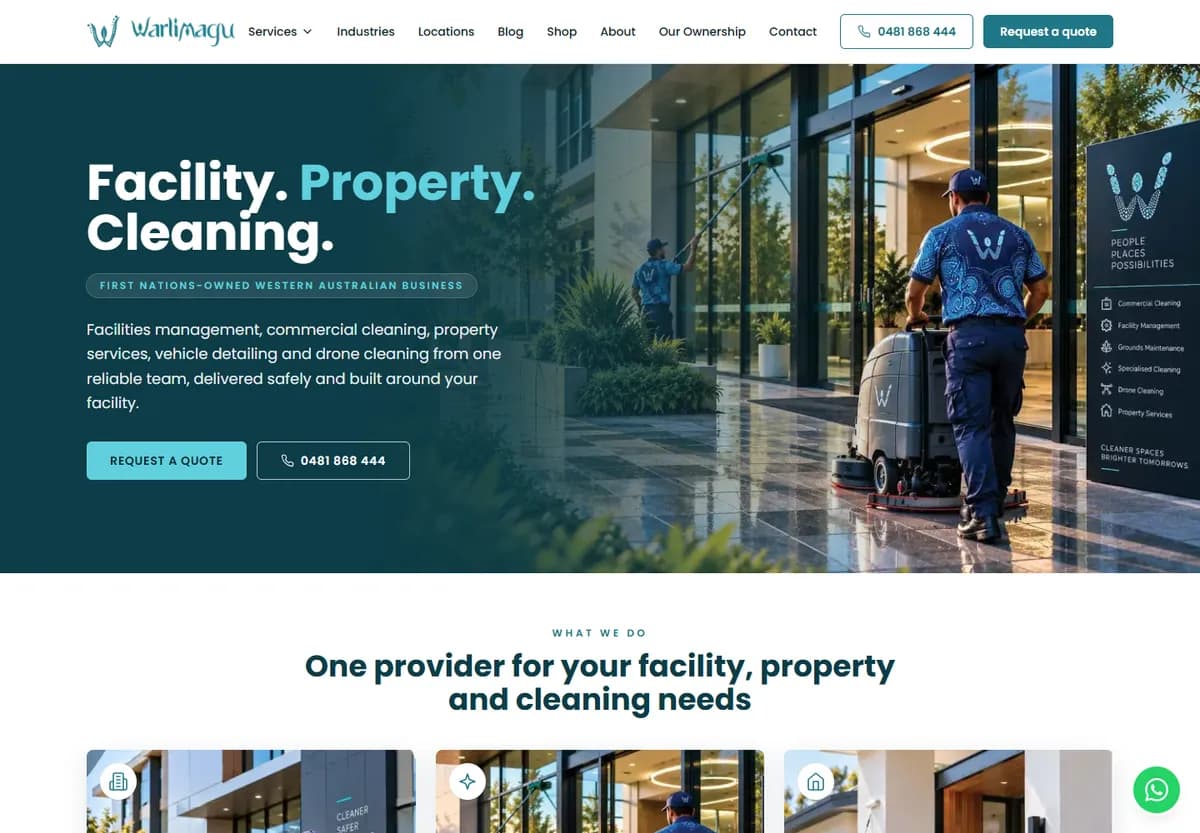
Next.js lead-generation website for a Perth cleaning-services company: quote capture with export and email, Google Business Profile, GA4 and Search Console, ongoing local SEO.
- Sector
- Cleaning & facility services
- Region
- Australia
- Stack
- Next.js
- Engagement
- Website build and ongoing SEO
An Aboriginal-owned facilities, property and cleaning services business in Western Australia. Next.js website: enquiry capture with export and email, Google Business Profile, GA4 and Search Console, ongoing local SEO.
- Sector
- Cleaning & facility services
- Region
- Australia
- Stack
- Next.js
- Engagement
- Website build and ongoing SEO
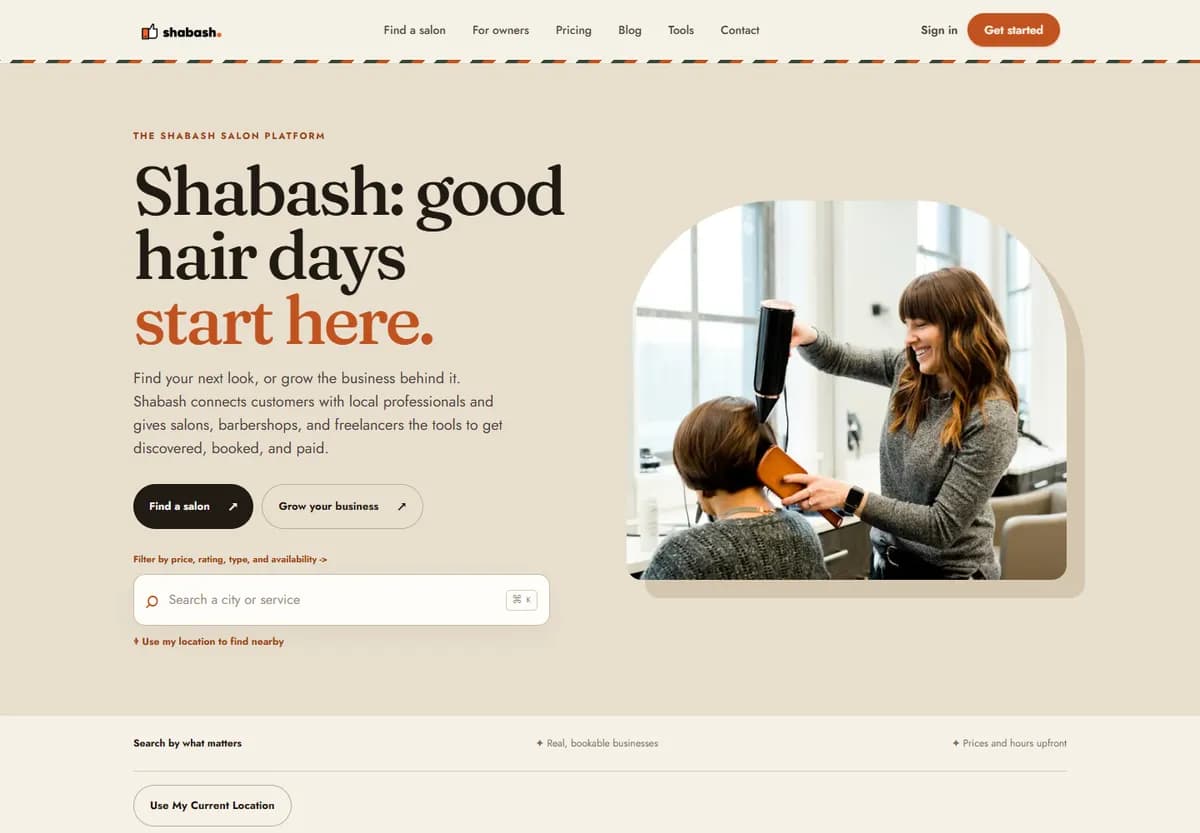
Shabash: free salon and barbershop management software we build and market for a client — customer and appointment management, public booking widget and API, mobile app, programmatic salon directory and content on Next.js with headless WordPress.
- Sector
- Beauty & personal services
- Region
- India
- Stack
- Laravel, Next.js, React Native, Headless WordPress
- Engagement
- Client product, build and marketing, early-access phase
WordPress website plus an integration that sends enquiries and customer data straight into Microsoft Dynamics for a Belgian supplier of water-treatment systems to businesses. Fixed-scope project.
- Sector
- Industrial & B2B
- Region
- Belgium
- Stack
- WordPress, Microsoft Dynamics
- Engagement
- Fixed-scope project

Questions
Is Next.js better than WordPress for SEO?
Neither has an automatic advantage. Google’s guidance is that Core Web Vitals are used by its ranking systems but that a good score doesn’t guarantee top rankings. Pages, content, reviews and local signals decide most of it. Both platforms can produce a page Google can read.
Can I edit a Next.js site myself?
Not without a content system added to it. Our own Shabash project pairs a Next.js site with headless WordPress so that marketing can publish without a code release. That gives you the editor, but also two systems to maintain.
Which is more secure?
Neither looks after itself. WordPress’s risk sits largely in out-of-date plugins and themes. Next.js has fewer moving parts on a simple site, but its own security releases still have to be applied. Ask who will do that, and how quickly.
Can I move from one to the other later?
Yes, though it is a rebuild of the site rather than a setting. Keep your URLs where you can, redirect the ones you can’t, and carry your content, analytics and lead tracking across.
More on service-business websites
- Core Web Vitals benchmark of service-business websitesLighthouse tests we ran ourselves on 25 sites in five categories, with the method.
- How fast should a small-business website be?The targets that matter, and what our test sample actually reached.
- What a cleaning-company website needs to get quotesTwo sites we built, and the parts that do the work.
- Local SEO setup checklist for a new websiteWhat to set up before launch, in the first week and in the first month.
Tell us who will run the site
Share what you have now and who updates it. We will recommend one or the other, and we build and look after both.
We reply within one business day (IST).